
Audi’s Electric Sports Car Is Coming, and It’s the TT’s Spiritual Heir
 Evan Simms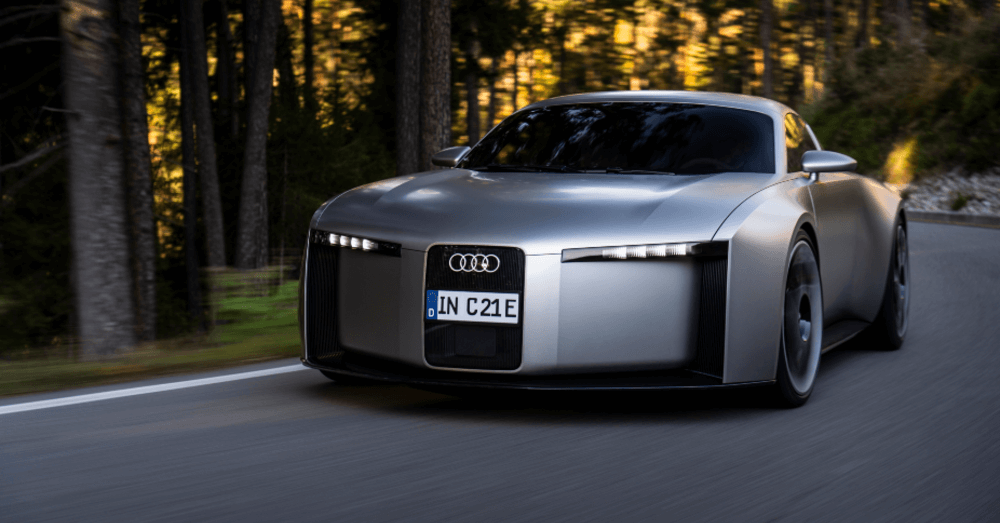
Audi fans who mourned the loss of the TT have something to look forward to. The German automaker has confirmed that an all-electric sports car, previewed by the Concept C, will reach production and could arrive as soon as 2027. This new two-seater won’t carry the TT name, but it picks up exactly where that beloved coupe left off.
- Audi unveiled the Concept C at the 2025 Munich auto show as a targa-style electric coupe that will replace both the TT and R8 with a single electric model sharing its platform with the upcoming electric Porsche Boxster and Cayman.
- Design chief Massimo Frascella told Autocar the Concept C is “a preview of a production car” and confirmed 2027 as the expected launch date.
- To keep pace with the fast timelines set by Chinese automakers, Audi plans to bring this new electric sports car to market just 30 months after the project was approved.
The Concept C Sets the Stage
Audi unveiled the Concept C, an all-electric two-seat roadster, in Milan on September 2, 2025. It’s described as a two-seat drop-top preview of a next generation of design for the brand, taking its primary inspiration deep into Audi’s archives, all the way back to the Auto Union days. That’s a nod to the Type C, one of Auto Union’s dominant Grand Prix machines from the 1930s, which was built around a 6.0-liter V16 engine.
The Audi TT successor EV committed to production is a big deal for the brand. CEO Gernot Döllner called the upcoming EV a “TT Moment 2.0,” referring to the role the TT played for Audi from a design standpoint in the ’90s. Döllner confirmed that a production version of the electric sports car will be built, and he openly discussed the need for Audi “to get back on track.”
While the Concept C takes heavy inspiration from Audi’s sports coupe, CEO Döllner ruled out applying the TT name to the production version, saying “it’s a different segment to the TT” and that it slots “exactly in the middle between TT and R8.” He added that Audi “will come up with a name once the car hits the road.”
A Shared Platform With Porsche
The electric TT successor will share more than a few parts with Porsche’s upcoming all-electric 718 Boxster and Cayman. All three will ride on a modified version of the PPE platform co-developed by Audi and Porsche. The battery pack will sit behind the seats rather than under the floor, creating weight distribution similar to a mid-engined sports car.
The new Audi model will use an 800V electric architecture and be sold with the choice of either single-motor rear-wheel drive or dual-motor all-wheel drive. That dual-motor setup ties directly into Audi’s quattro heritage, which has been part of the brand’s identity for decades.
Volkswagen Group boss Oliver Blume has been clear that despite the technical overlap, each model will stand on its own, saying the brands have “very clear brand identities which are very different between Porsche and Audi.”
Built Around the Driver
According to Audi chief technical officer Geoffrey Bouqout, the automaker is eager to make sure the electric TT is as fun to drive as possible. Bouqout added that Audi has taken inspiration from the TT and mid-engined cars “and translated it into a BEV model,” noting they “don’t want to give some gimmicks” to improve the driving experience. He emphasized acceleration and stability, saying the team can “fine-tune all the sportiness.”
Unlike some rivals, Audi has no plans to generate fake engine sounds. Audi Sport’s Rolf Michl explained they tested prototypes with simulated five-cylinder sounds “and it didn’t fit at all.” The team’s approach? Silence is the new calling card.
Performance numbers haven’t been officially released yet. But reports suggest that while the most extreme Audi TT RS hit 0 to 60 mph in 3.6 seconds, its successor could potentially do it in as little as 3.0 seconds.
Design Language That Will Shape Audi’s Look Going Forward
Audi intends to put something like the Concept C into production, and the presence of mirrors and windshield wipers on the concept hints that the final product shouldn’t stray too far from this first step. This TT successor could even set the tone for Audi’s new visual identity, influencing the brand’s sedans, SUVs, and wagons in the years to come.
The cockpit features a power hardtop that retracts beneath the rear decklid, taking up space behind the seats but creating a car that looks equally good with the roof up or down. With the roof closed, the clean shape honors the TT nicely, while the open configuration creates a targa-like opening to the sky.
Inside, Audi fabricated the physical controls from anodized aluminum for “a tactile feel that reflects mechanical quality,” and a foldable 10.4-inch screen in the center console provides information in context without dominating the cabin.
Is 2027 Realistic for Audi’s Electric Coupe?
Audi has already started testing prototypes of the TT’s all-electric successor. To keep pace with Chinese automakers’ fast timelines, Audi plans to launch the new car just 30 months after project approval. That kind of turnaround is a big shift for a brand known for taking its time.
There are potential complications, though. Porsche’s chosen battery supplier, Northvolt, filed for bankruptcy, and assembly partner Valmet reportedly faced delays, pushing the 718 EV’s launch from 2025 to at least 2026. Since Audi’s car shares a platform with those Porsche models, any ripple effects could impact its own timeline.
Still, Audi appears firmly committed. With prototypes on the road and a concept that already looks production-ready, the four-ring brand is clearly done talking about an electric sports car future. Now they’re building it.