
Porsche’s Electric 718 Puts Its Battery Behind the Seats
 Evan Simms
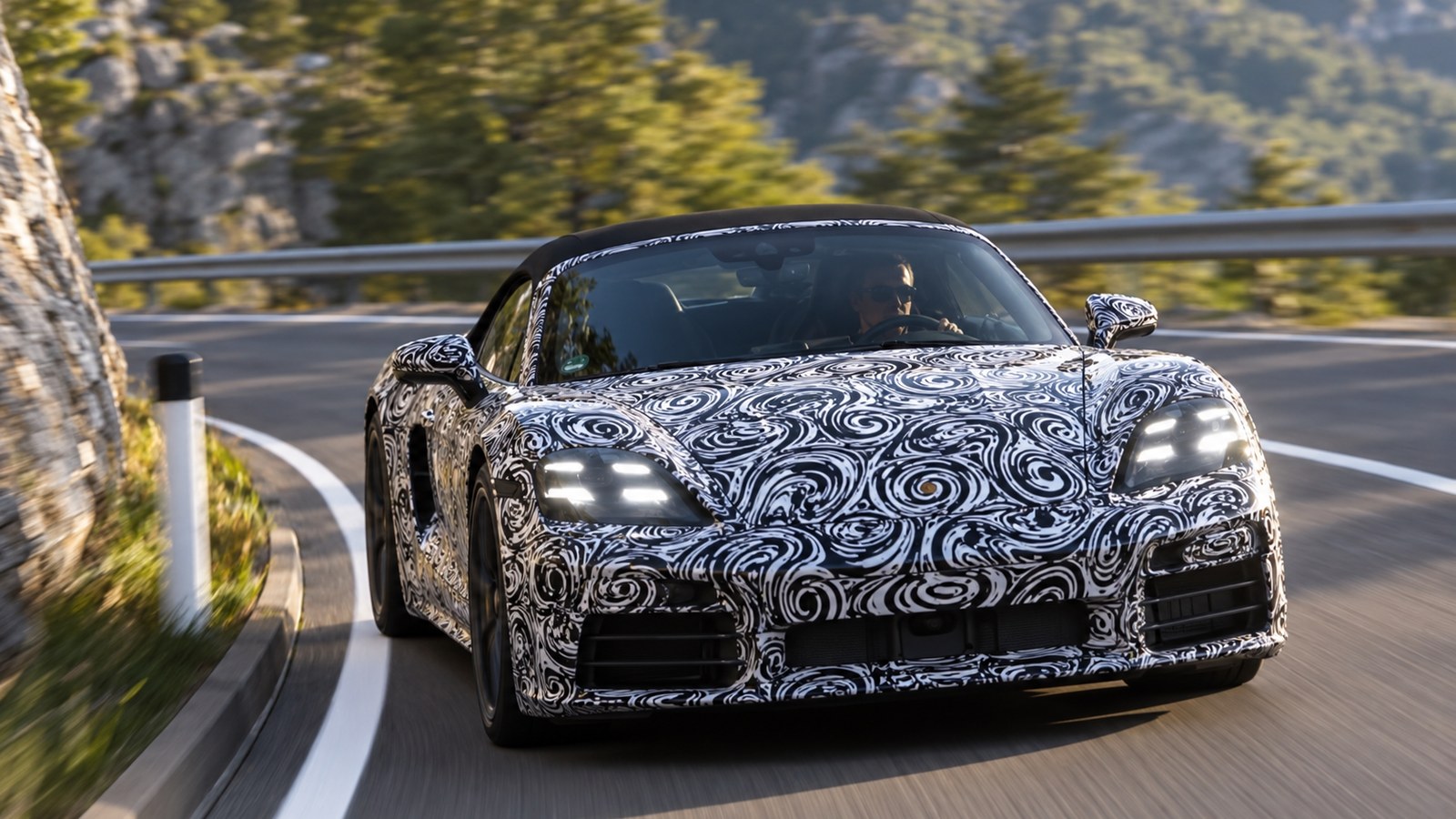
The Boxster and Cayman have always carried their engines right behind the driver’s shoulders. The electric versions coming next year still fill that space, but with something very different. Porsche is putting the battery pack where the four-cylinder or flat-six used to sit. It’s a bold bet that the cars can still feel like real mid-engine sports cars.
- The electric 718 Boxster and Cayman stack three battery modules on two levels behind the seats instead of under the floor.
- Porsche says the layout puts 55.2 percent of the weight over the rear axle and lets drivers sit low.
- No gas versions are planned. The cars break cover next year, and 2028 will be the first full year of production.
Why the Battery Isn’t Under the Floor
Most EVs ride on a flat battery pack that sits under the cabin. That works fine for crossovers and sedans, but it pushes the seats up. In a two-seat sports car, that’s a real problem, because sitting low is a big part of the fun.
So Porsche moved the battery. Three modules sit on two levels behind the seats, in the bay the gas engine used to occupy. Porsche calls the setup E-Core. In materials prepared for investors, the company made two promises for the battery design. It should keep the mid-engine character, and it should give drivers a low seat that feels like a true sports car.
The Numbers Behind the Layout
Robert Meier, Porsche’s head of vehicle architecture, says the electric 718 carries 55.2 percent of its weight over the rear axle. The outgoing gas cars ran a split of about 59.8/40.2. That means the EV sits closer to an even 50:50 balance than the car it replaces.
The pack does two jobs. Mounted in the middle of the car, it adds structural stiffness and becomes part of the crash structure. And with no battery underneath, the people inside can sit lower than they would in a typical EV.
Weight is the catch. Porsche hasn’t released an official number, but Auto Express reports the car could come in around 1,700 kilograms, or just under 3,750 pounds. For comparison, a previous-generation Cayman S weighed 2,988 pounds in US spec. That’s roughly 750 extra pounds in a car known for being light on its feet.
Fake Shifts, Real Questions
Top Gear learned that the next Boxster and Cayman will get the Taycan‘s optional E-Shift system. It mimics gear changes and engine sounds, so acceleration feels more familiar to drivers coming out of gas sports cars.
Software can fake a shift, but no one will mistake an electric motor for a flat-six. For a brand built on its sporting past, getting the basics right matters more than big acceleration numbers. The car has to feel right from the driver’s seat.
Early signs look good, though. Car and Driver rode shotgun in a camouflaged 718 Boxster EV prototype at Porsche’s Weissach test track in Germany. They came away surprised by how familiar it felt, from the low seating position to the proportions and the way it moved.
No Gas Option This Time
Earlier reports suggested Porsche might offer combustion versions alongside the EVs. That plan is dead. The company’s latest product strategy covers only the electric models, so the new 718 will go on sale with no gas option.
The 911 is going the other way. Porsche CEO Michael Leiters has said plainly that the 911 will never be electric. It keeps its gas engine, and some versions will even keep a manual gearbox. So the lineup now splits in two. The 911 stays the home for combustion fans with deeper pockets, and the 718 becomes Porsche’s electric sports car.
What to Watch When the Electric 718 Debuts
The electric Boxster and Cayman break cover next year, and 2028 will be the first full year of production. If you’re a fan, there are a few things to watch for. Look for the official curb weight and whether it lands near that 3,750-pound estimate. Read reviews of how low the seat really feels compared with the gas car. Check whether E-Shift comes across as fun or as a gimmick. And watch how that 55.2 percent rear bias works on a twisty road.
Putting the battery where the engine lived is a clever answer to the biggest complaint about electric sports cars. Now the cars have to prove it on the road, and that’s where Boxster and Cayman fans will make up their minds.